
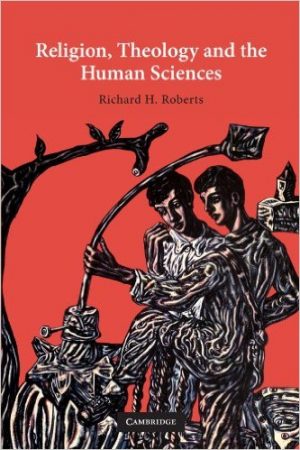
This study explores the religious consequences of the so-called “end of history” and “triumph of capitalism” as they have impinged upon key institutions of social reproduction in recent times. The book explores the imposition of managerial modernity upon successive sectors of society and shows why many people now feel oppressed by systems of management that seem to leave no option but conformity. Richard Roberts attempts to challenge such seamless, oppressive modernity, through a reconfiguration of the religious and spiritual field.
ISBN: 9780521795081
 | Richard RobertsBorn in 1946, I was one of the first cohort to pass through the Department of Religious Studies established by Professor Ninian Smart at Lancaster University in 1967. I then studied Theology at Cambridge under Professor Donald MacKinnon, before moving to Edinburgh to research for a PhD supervised by Professor Thomas F. Torrance, and then participated in the New College/Evangelisches Stift Exchange in Tübingen in 1975. I taught systematic theology at the Universities of Leeds and Durham (1975-89) before becoming M. B. Reckitt Research Fellow at Lancaster (1989-91) convening the project Religion and the Resurgence of Capitalism. In 1990 I was appointed Professor of Divinity at the University of St. Andrews and in 1995 returned to a Chair in Religious Studies at Lancaster. I became Emeritus Professor at Lancaster in 2002 and have been Honorary Professor at the University of Stirling since then. I was recently appointed Honorary Fellow in the School of Divinity, University of Edinburgh. Books include: Hope and its Hieroglyph: A Critical Decipherment of Ernst Bloch’s ‘Principle of Hope’ (1990); A Theology on Its Way: Essays on Karl Barth (1992); co-edited with J.M.M. Good, The Recovery of Rhetoric: Persuasive Discourse and Disciplinarity in the Human Sciences (1993); Religion and the Transformations of Capitalism: Comparative Approaches (1995); co-edited with Joanne Pearson and Geoffrey Samuel, Nature Religion Today: Paganism in the Modern World (1998); co-edited with Scott Lash and Andrew Quick, Time and Value, (1998); and Religion, Theology and the Human Sciences (2001/2). Recent papers include: “Gaia and Europa: Religion and Legitimation Crisis in the ‘New Europe'”, in Ralf Rogowski and Charles Turner (eds.), “The Shape of the New Europe” (Cambridge: Cambridge University Press, 2006), 146-166; “The Quest for Appropriate Accountability: Stakeholders, Tradition and the Managerial Prerogative in Higher Education”, Journal for the Study of Christian Ethics, 17/1, pp. 1-21; “‘Nature'”, Post/Modernity and the Migration of the Sublime” in Ecotheology 9.3 (2004), 315-337; “Personhood and Performance: Managerialism, post-democracy and the ethics of ‘enrichment'”, Studies in Christian Ethics, 21.1 (2008) 63-84; and “Surrender without Submission: Tessa Ransford, Somatic Sophia and the Daughters of Jephtha”, Scottish Affairs, no. 64, summer 2008 105-135; “‘… a bit o’ Heaven doon into Hell’: Scottish PEN, Hugh MacDiarmid and the Public Intellectual then – and now”, Scottish Affairs, no.70, Winter 2010; “Contemplation and the ‘Performative Absolute’: submission and identity in managerial modernity”, special issue of the Journal of Management, Religion and Spirituality (JMSR) (March, 2012) and revised in the Journal of Beliefs and Values 2013. Current research commitments: Chapter “God” in Johannes Sachhuber, Judith Wolfe and Joel D. S. Rasmussen (eds.), The Oxford Handbook of Nineteenth Century Christian Thought (8,000 words) for 31st August 2016. The development of a book on the basis of publications that have emerged out of my longstanding engagement with the impact of “managerial modernity” upon higher education and the contemporary crisis in the humanities in Anglo-America. The completion of the monograph, Religion and Social Theory: A Critical Introduction for Wiley-Blackwell. Future project at field work research stage for a monograph provisionally entitled The Absence of Tantra: God and the ecology of human sexuality. Current research interests: the interface between music, performance, ritual, liturgy, care of the dying, theology and altered states of consciousness. |